 |
 |
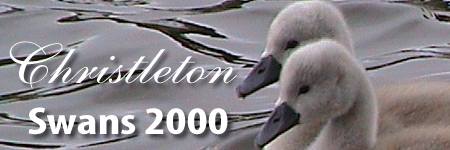
| This season has been a very bad one for our Christleton swans. Initially only two eggs were hatched, and one of these cygnets died after six weeks. However the remaining cygnet did well and was eventually taken on a flight by the pen, and they were spotted together at The Groves in mid September. The cygnet was abandoned there to find his own way in life. However, on route back to The Pit, the pen seems to have had an accident on the canal. Several people reported seeing her apparently sleeping on the bank near Quarry Bridge, but they became concerned when she didn't appear to be moving at all. When I found her the next morning she had been dead for some considerable time, but an examination of her body revealed no obvious cause of death. My guess is that the death was probably caused by a sudden illness or a straight forward accident, and I buried her later that day at Hockenhull Platts.
Subsequently the cob has looked very lonely, and he too flew down to The Groves, and a week later appeared on the canal at Rowton. However, his presence was not welcomed by another pair and their four cygnets who have taken over the canal territory this year. There was a fierce battle in which our cob was badly damaged and almost killed. Fortunately, he seems to have had just enough strength left to struggle away from the attack and took refuge near Quarry Bridge at the spot where his mate had earlier been found dead. He is still there today (10/10/00). Several people have recently reported seeing six buzzards flying together in the skies above the village. I am aware that there were at least two pairs breeding in the Parish, and this group appears to have been a pair with four youngsters enjoying some good thermals between the Primary School and Bridge Drive. Apart from being a large brown bird of prey with fingerlike tips to their wings, you might hear them call and this will aid identification. They make a mewing call, rather like a cat as they soar to great heights above your head. David Cummings |
|