CHRISTLETON
Curios and Curioser

BY PHILIP HARLAND
Swimming in Stoneware:
The Art of Fish at Doulton Lambeth
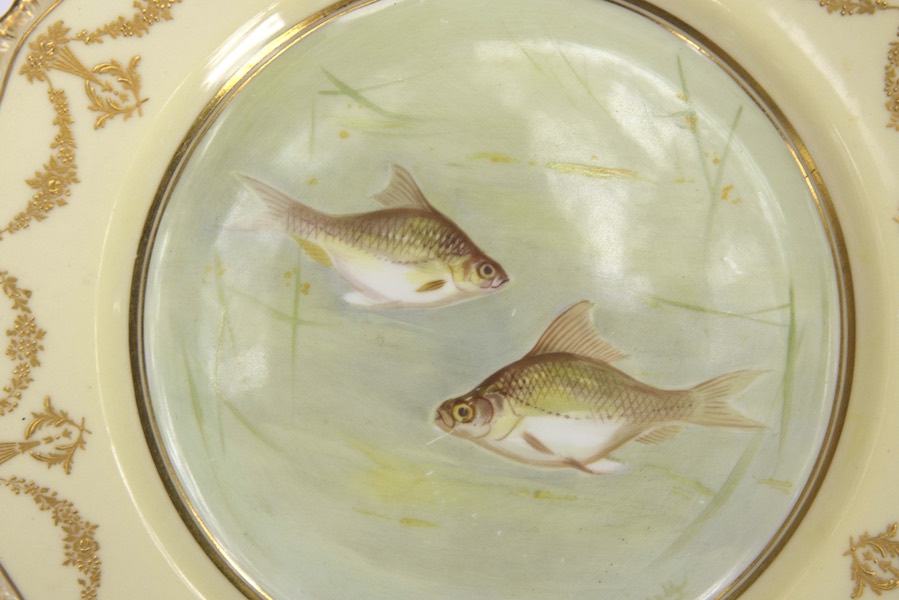
The Victorians were obsessed by the natural world and even the most utilitarian of items became a canvas to express this fascination. A dinner plate was never just a dinner plate. In the hands of decorators at Doulton Lambeth, it became a study in light, water and movement.
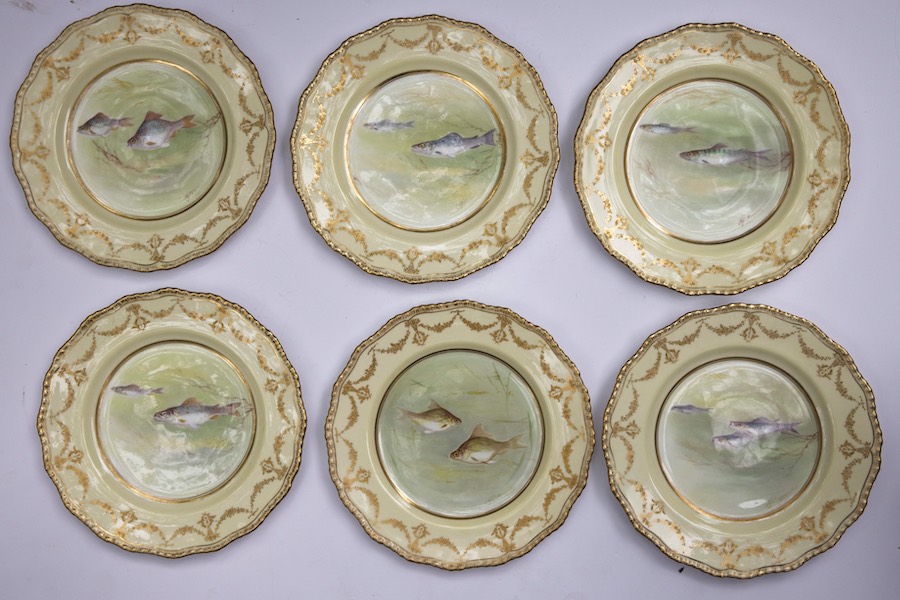
Sets like this from the late 19th century capture that spirit perfectly. Perch, trout or bream glide across softly washed green grounds that suggest the depth and stillness of a river pool. The painting is careful but never stiff; there’s life in the flick of a tail or the shimmer along a flank. Framing the scene are rich gilt swags and molded borders created through the meticulous application of gesso and gold. Whether these plates were ever destined to be part of a dinner table array is doubtful, however their presentation as potential ‘crockery’ only adds to the allure.
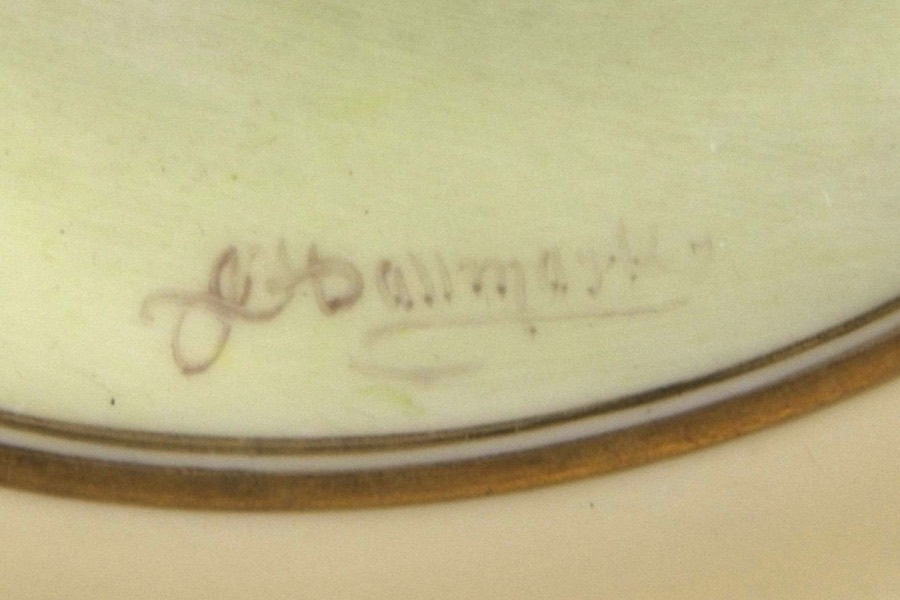
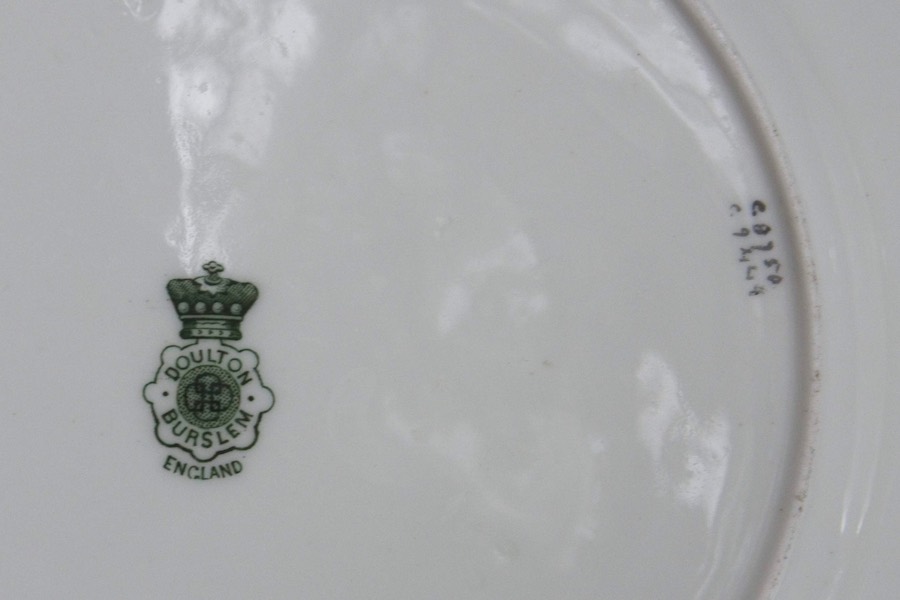
What makes them especially appealing is that they were individually hand-painted. Doulton employed skilled artists who brought both technical control and a keen eye for natural history to their work. The signature on each plate leaves no doubt that both the artist and the company regarded this as far more than mere decoration, this was true artistry.
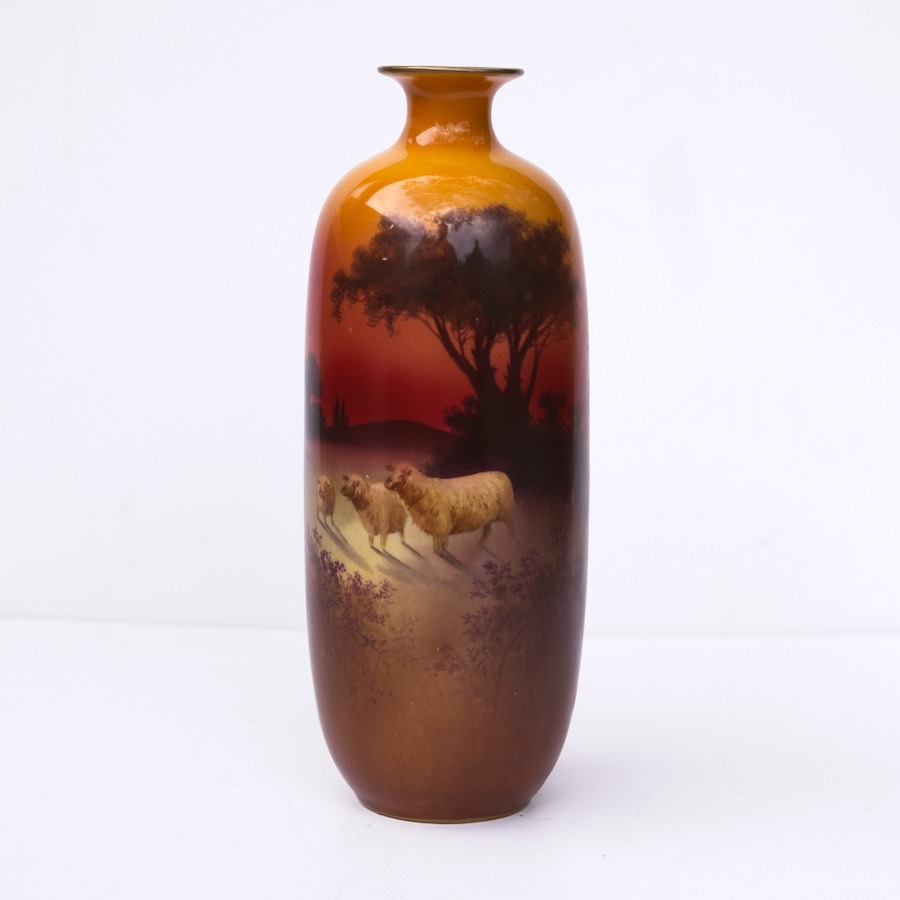
A slightly later (1920’s) creation by Royal Doulton
These plates are (superlative) examples of a wider tradition. Firms such as Royal Worcester, Minton and Wedgwood also maintained teams of talented painters and decorators throughout the 19th and early 20th centuries. Whether flowers, birds, fish or highland cows and sheep (as in the above early 20th century vase) British ceramics of this period show how industry and artistry could work hand in hand—turning everyday objects into small, enduring works of art.
DISCOVER MORE

CELEBRATION

LOUISE RAYNER

BLUE AND WHITE

SILVER MARKS
PORCELAIN
FLATBACKS
STRETTON MILL
SILVER PLATE
WITCH MARKS
FINDING ANTIQUES
SPOOKY ANTIQUES