CHRISTLETON
Curios and Curioser

BY PHILIP HARLAND
This is Imari
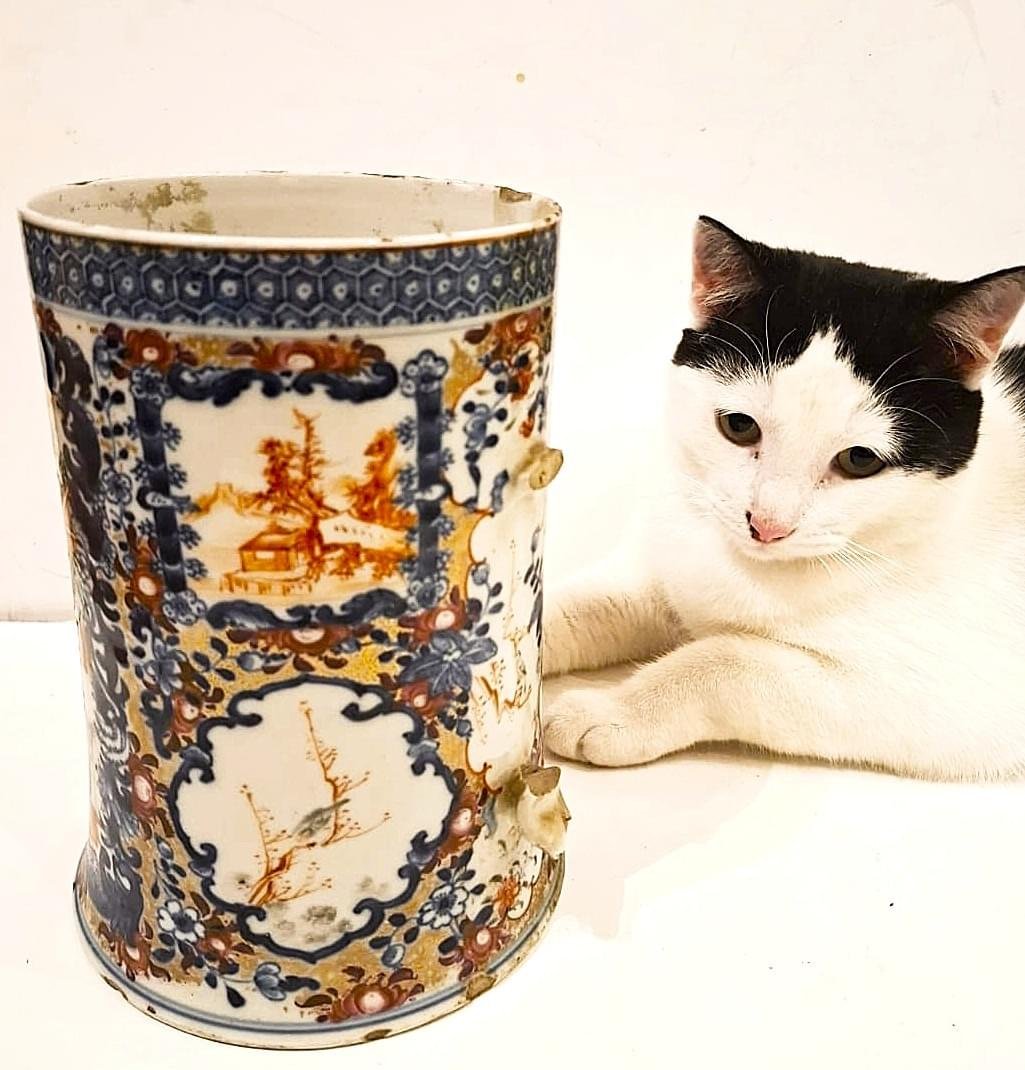
Chinese tankard (minus handle) from around 1800
There are few styles of porcelain quite as instantly recognisable as Imari. With its deep cobalt blue, iron-red decoration and liberal application of gilding, it was never really designed to be shy. Although these gorgeous ceramic pieces are associated above all with Japan (Imari being the name of the port nearest the region of Arita from where heavily laden cargo ships embarked) the red, blue and gold trinity had already been harnessed by Chinese crafts people some decades before.
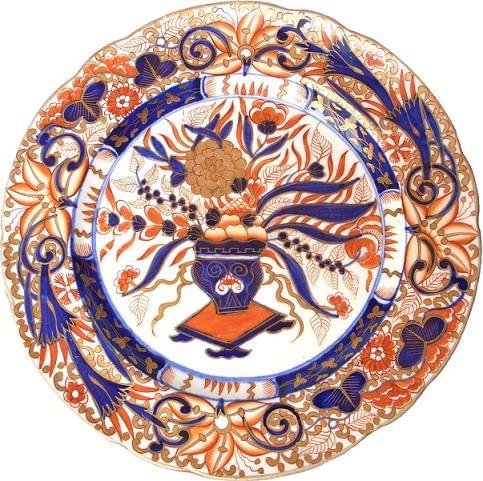
Crown Derby Imari plate, 19th century
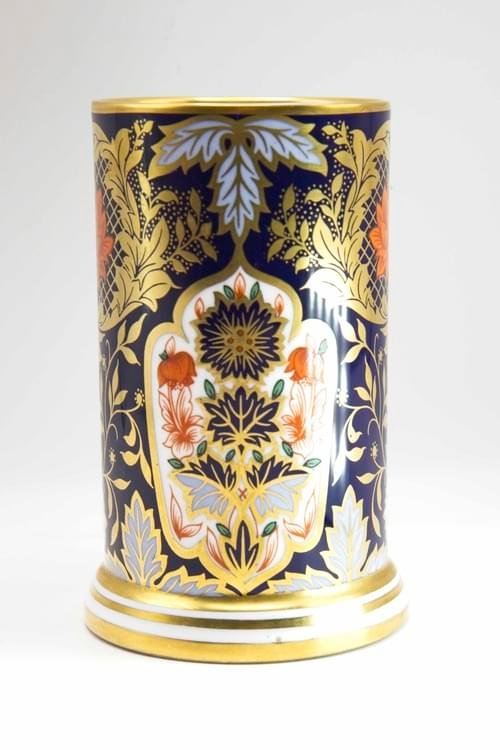
Crown Derby vase, late 20th century
For 250 years, from 1603 Japan was fundamentally closed off to much of the (Christian) world. This isolationism (called Sakoku) meant that the limited wares that did get through to Europe were endowed with a value way beyond their actual worth. By the late 18th century the great British producers of household pottery had already begun to reproduce the colourful geometric patterns and colours for which Imari was best known. Royal Crown Derby was truly supreme in this domain: production of outstandingly beautiful and lavish porcelain in scores of different Imari-type patterns made this Midlands company Primus inter Pares. When, in 1868, Japan re-opened its borders to the outside world the appetite for Japonisme seemed insatiable with tea, colourfully decorated fabrics and, of course ceramics making their way into thousands of homes.
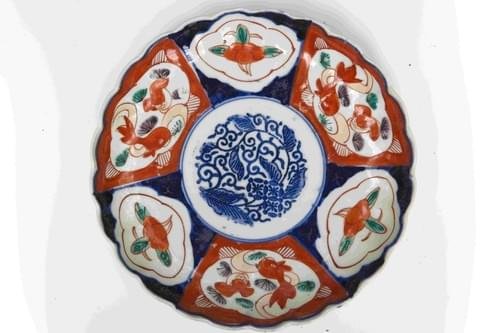
Imari plate imported from Japan in the early 20th century
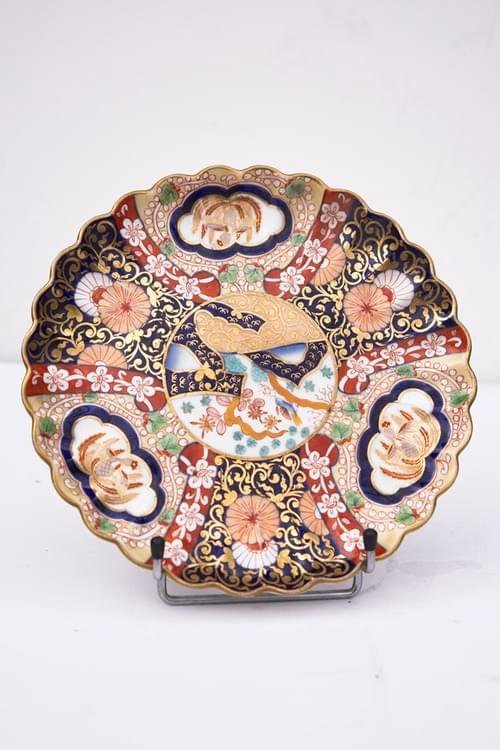
Early 20th century imported Japanese plate
Throughout the early part of the 20th century anything that came from (or looked like it came from) Japan was a de rigueur element of the middle-class household.
Most coveted of British Imari was, not surprisingly Royal Crown Derby and the company continued to produce their huge range of designs until just a few years ago. More recently I have come across Imari porcelain in typical Crown Derby design imported from…China! What goes around comes around.
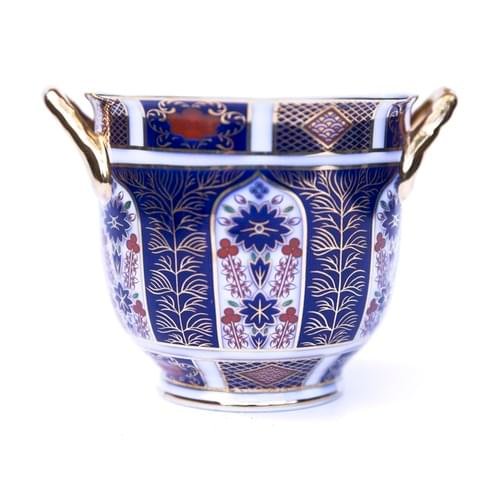
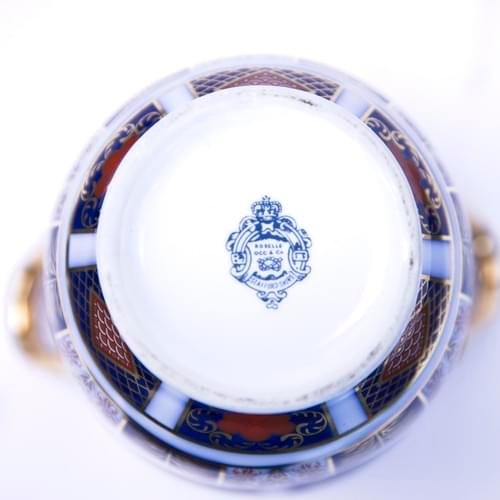
A ‘fake’ imported Imari bowl with a made up British backstamp
Most coveted of British Imari was, not surprisingly Royal Crown Derby and the company continued to produce their huge range of designs until just a few years ago. More recently I have come across Imari porcelain in typical Crown Derby design imported from…China! What goes around comes around.